Margaret Innes

New Worlds: Reading, Writing and the Imagination


1 Comment

A Love Letter to Sartre’s Nausea

On our bookshelves is a very battered copy of the green Penguin Twentieth Century Classics edition of Jean-Paul Sartre’s Nausea, translated by Robert Baldick. On the inside covers, front and back, is a letter written by someone unknown to me. A letter written to accompany the book when it was given to the woman it’s addressed to. I’ve changed the names to Anne and Joseph just in case some strange twist of fate brings to their notice the fact that I’m publishing this letter between them or if anyone out there knows them. For those reading, the dedication in this edition is To The Beaver. Other than for the names and one illegible scratching out, this is an exact transcription including the spelling mistakes.

Dear Anne,

Notice firstly who (what?) Satre dedicates this book to. ???

You once said you doubted your existence. This feeling we have shared, once I even thought myself as a figment of my own imagination thus cancelling myself out (an explanation to this is, I hope, not required here.) You ‘pinched’ me out of that dream.

This book, Well I found it interesting to say the least & I feel (if it is possible for me to do such a thing) that the less said the better.

If you do read this book I have found it more effective in situations of unknown crowd company. for example a bus or train. 

                                                                        (see back cover)

I’m not telling you to read this book, that would be un-existential, giving you this book is un-existential …..

Perhaps you could relate some of Monsieur Roquentin’s experience to Meg’s  ???

I sit on the wall watching people as if I am a fly. ( You also whispered something about being on the ‘EDGE’ )

Sometimes the fly will coment & be noticed, but merely as that, a fly not a living organism. Some will say a fly is not intelligent, a fly has no consciousness. What are these things?? It does not matter if we squash the fly on the wall. If I squashed a fly on the wall today and no one else knew or saw the body. Did it exist?

“Some of these days

You’ll miss me honey”

                                                                                                love

                                                                                                Joseph.

I’ve asked myself, is this the kind of letter you write when you are young (or maybe not so young) and drunk or stoned and deeply troubled with existential angst and unrequited or even requited love? A lot of it seems very, very appropriate for a novel which is all about asking if there is meaning in life. Its content curiously matches the subject of Sartre’s most important non-fiction book, his philosophical work Being and Nothingness. You might even say it got to the heart of his work, in its own words.

This letter comes with a book that has an unknown provenance. We have no idea how it ended up on our shelves. Neither of us remembers buying it and it has no price other than the printed English and New Zealand prices on the back cover. My husband works at the Lifeline Bookfair and if it had been donated there, it couldn’t have been sold. It’s in such bad condition, policy says it would have been thrown into the recycling. So perhaps he brought it home for us to read and the letter came with it, just as it once went to Anne.

So somehow this letter has fallen into our lives as a random piece of writing about being and nothingness, love and despair and loneliness, something that is unexpectedly poetic in places. I’m putting it out there because it moved me, because it is such a strange happenstance that we should find and read something so personal in such a place, and because it seems to have been written from the heart. It’s a small prose poem by an unknown writer touching on things most fundamental to many of us.9

1 Comment

Ian Hamish and Ukraine: A blog

This is a story about how unexpectedly one morning I opened my email to be asked if I would moderate a comment on my blog Stepping into Eternity: Stories of my Family where I wrote about my uncle, Ian Innes-Sim. A Terry Joyce in England had written Hello, I am doing some research into Ian Innes-Sim as he was recorded as being part of the 2nd Rayleigh Scouts. Can you help? I said I could, we exchanged emails and out of that exchange comes this blog.

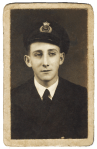
Terry’s researches revealed that as a scout in May 1937, at almost fifteen, my uncle was part of a three man team that won the Local Junior Marathon. Later in July of that year he was a Patrol Leader who went to the World Jubilee in Holland where he would have seen Robert Baden-Powell give his farewell speech. Then in July of 1939 he joined the SS Test Bank as an apprentice marine engineer, following in his father’s profession, at the start perhaps of hopefully a good life. Barely two months later in September of that same year World War 2 was declared, and three and half years after that in January 1943 my uncle, as an apprentice in the Merchant Marine, died at the age of twenty when the ship he was on, the Oakbank on voyage in the south Atlantic, was torpedoed and sunk. He and the captain were rescued by the U-boat that sank them, but both died when that vessel was itself sunk by the Allied forces. I am very sure the shock of my uncle’s death began the slow unwinding leading to my grandmother’s own death five years later. I do know from my mother how very proud she was of her son’s scouting achievements. He has no known grave and I only have one photograph of him, possibly taken when he joined the Merchant Marine and which is attached.

I sent a copy of this picture to Terry, and he replied with an image of the logbook from the 2nd Rayleigh Scouts from 1924 -1944 recording the names of the scouts who fell in action during WW2. It was a simple typewritten list of nine names, six from the RAF, one from the Army, another from the Fleet Air Arm and my uncle from the Merchant navy. There is a note written on the bottom of the page in green ink: ‘They were strong & beautiful in their lives and are an everlasting example to us.’ Terry had also sent the link to a YouTube video of the jamboree in 1937 and considering what was to happen, it’s poignant to watch. Who knows what the fate was of so many of those young men in the film, my uncle among them? My uncle is commemorated on Tower Hill Memorial, which is maintained in perpetuity, as it says, by the Commonwealth War Graves Commission. How many of his fellow scouts’ names ended up on memorials around the world as well?

While I write this story of loss and grief, I think of a news item I saw just a few days ago, young men in Ukraine manning checkpoints against the Russian invasion. They were university students, like my uncle just twenty or in their late teens, given three days training, and then sent with a gun to protect the capital, the nation. There was other reports of young Ukrainian men and women, also new soldiers, getting married in the midst of war in their uniforms, hugging each other before fighting. According to news reports, many of the soldiers in the Russian army are conscripts, young men also, some with only a few months training, who did not know where they were being sent or who they were expected to fight and kill. I think of a Ukrainian woman giving sunflower seeds to one of these young men so when he died the bright yellow flowers might grow from his body in the nation’s soil. I think also of the maternity hospital in Mariupol bombed, a pregnant woman rescued and taken to another hospital where both she and her child died. She had begged the doctors to save her child’s life.

William Blake wrote in one of his poems, “The strongest poison ever known came from Caesar’s laurel crown.” Everything that is happening in Ukraine now is proof of that line. When both the young Ukrainian or the Russians soldiers die in combat, it’s likely their names will end up on memorials in their countries just as my uncle’s and certainly numbers of his fellow scouts did after WW2. When the civilians die in the shelling, just as the soldiers have died fighting, it will again be for the delusions of power and egotism of leaders like Vladimir Vladimirovich Putin and his inner circle. Again it will be everyone else who will suffer the ongoing grief. I am asking myself why the delusions of men like Putin have to cost so much in other people’s lives, not just once but over the generations. Who will be accountable for this and why is it still happening now, why it can’t be stopped? The best place to ask these questions would be in the criminal court in The Hague, should Putin and his inner circle ever end up there to answer for their war crimes.


Leave a comment

Ladies in Black or What’s your subject?


The Ladies in Black in the film of the same name take their places behind the counters of Goode’s Department store in the summer of 1959 when Australia is already changing under the arrival of Europeans displaced by war and a loosening of the white Australia policy. It’s a coming of age drama, where the richness European migration is adding to the nation is contrasted against a telling critique of male-female relations at the time. Throughout the film Sydney looks wonderful, soaked in the summer sun, a harbour minus the Opera House, dominated by the Bridge.

Among the ladies is Lisa, employed for the season in her ugly black dress, having just finished her Leaving Certificate and being in that hiatus between school and some other life. At home in all its suburban dullness, Lisa is Lesley, constrained by her parents and chanting one of William Blake’s Songs of Experience, Tyger, Tyger to herself in bed. Becoming Lisa elsewhere, and especially under the wing of Magda, once a Slovenian refugee and now presiding over Goode’s enchanted realm of Model Gowns, she’s an emerging butterfly, learning who she is, what she can do, what she could wear if she had the means.

When I went to see Ladies in Black, I expected to be entertained. I didn’t expect to be moved but watching Angourie Rice play Lisa/Lesley, I was moved, for the sense of hope and possibility she brought to the role. Noni Hazlehurst, perfect as Miss Cartwright, Lisa’s supervisor, with tears in her eyes tells Lisa she’s a clever girl, the most wonderful thing in all creation. With its light touch, Ladies in Black convinces that it is possible for Lisa to do extraordinary things.

But is that touch too light? Some critics have thought so. The film pretty much stays with the book, The Women in Black (Text) by Madeleine St John, first published in 1993. Stefan, Magda’s husband, a Hungarian, says to Lisa when she comes to lunch with them one day that she should read Jane Austen’s Emma, Austen (he says) being as great a novelist as Tolstoy. And like Emma, both the novel and the film handle the bleakness of the personal lives and the marriages of the women who work at Goodes with a deceptive lightness of touch.

It’s not only about the narrowness of life in Australia at the time and its often stifling, shallow rigidity. It’s Patty William’s husband running in terror, unable to cope emotionally after unintentionally falling into good sex with his wife. There’s the tedium of Fay and her friend, Myra’s dates talking cricket to each other while they ignore both women, other than for Fay’s date to put his hand on her thigh. And Lisa’s father off to spend hours at the pub, leaving his wife and daughter behind to get his dinner. There’s no companionship here, no conversation or good humour between equals such as we see between Magda and Stefan and their friend, Rudi.

There is a darkness behind the book and its lightness. Trapped in a marriage as bleak and loveless as any in the film, subjected to shock treatment and medicated, Madeleine St John’s mother, Sylvette committed suicide when Madeleine was twelve in 1954. Her father, Edward St John’s actions in response only added to his two daughters’ trauma, a trauma which stayed with Madeleine all her life. As Lucy Sussex puts it in her review of Helen Trinca’s biography of Madeleine (also Text):

“The mores of the time dictated that a difficult woman, one who did not comply, was to be medicated into passivity. The alternatives – divorce or a reconceiving of gender relations – were simply unthinkable. Small wonder the next generation of women – the Madeleines and the Germaines – grew up furious, if not actual furies.”  https://sydneyreviewofbooks.com/keeping-the-darkness-at-bay/

How does a writer choose what to write about? With the darkest of tragedies in the bedrock of Madeleine St John’s emotional life, she wrote, with perfectly balanced literary skill, a book that dealt with her subject – the loneliness and harshness of empty marriages, how destructive they are – with wit, sharp humour and hope. The deftness of Madeleine’s work rests on the unseen darkness in her sensibility, much like subtle shadows in a painting give greater contrast to the representation of light. The very thing that is out of the picture, the reality not invoked in the text, the bleakness of her mother’s life and death, and Madeleine’s own grief, is its actual strength. Unspoken, it provides the underlying emotional chemistry which makes her writing, with all its apparent lightness, come alive.